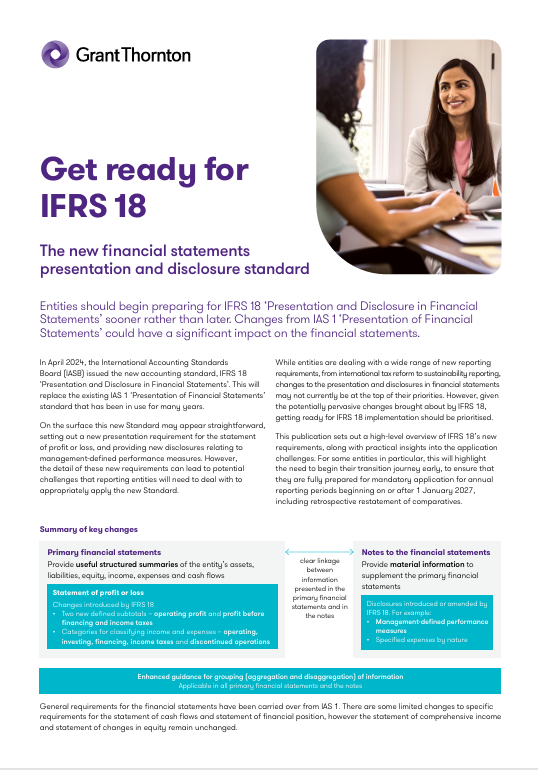
IFRS 18 applies for annual reporting periods beginning on or after 1 January 2027 and will replace IAS 1. Although it does not change recognition and measurement principles, it will significantly affect how financial performance is presented and disclosed.
With IFRS 18 - Presentation and Disclosure in Financial Statements becoming effective for periods commencing on or after 1 January 2027, organisations should already be assessing the impact on their financial reporting. The new standard will replace IAS 1 and represents one of the most significant changes to the presentation of financial statements in recent years.
While IFRS 18 does not change how assets, liabilities, income or expenses are recognised and measured, it does introduce important changes to how financial performance is presented and disclosed. These include new mandatory subtotals such as Operating Profit and Profit Before Financing and Income Taxes, a structured classification of income and expenses, enhanced aggregation and disaggregation requirements, and new disclosures relating to management-defined performance measures.
IFRS 18
Download 'Get ready for IFRS 18'
Explore the main changes introduced by IFRS 18, together with practical guidance to help organisations understand and address potential implementation challenges.
According to Grant Thornton’s global IFRS publications, entities should not underestimate the implementation effort required. For many businesses, adoption may extend beyond updating financial statement templates and could require changes to chart of accounts structures, reporting processes, internal KPIs, financial systems and covenant reporting. The retrospective application requirements also mean that comparative information will need to be restated.
IFRS 18
Download 'Insights into IFRS 18'
This publication provides a snapshot of the main requirements introduced by IFRS 18, helping organisations understand the changes and their potential reporting implications.
Review existing performance measures and non-GAAP metrics
Assess whether finance systems can produce the required information
Plan for comparative reporting requirements
Provide training to finance teams, management and boards
Although compliance is a key driver, IFRS 18 also presents an opportunity to enhance transparency, improve comparability and strengthen communication with stakeholders.
How Grant Thornton Malta can help
Grant Thornton Malta can support organisations through IFRS 18 impact assessments, financial statement reviews, training workshops and implementation planning to help ensure a smoother transition and avoid last-minute challenges as the effective date approaches.
Preparing for IFRS 18?
Get in touch with our team for support
With IFRS 18 introducing significant changes to the presentation and disclosure of financial statements, organisations should start preparing well ahead of the effective date. Understanding the impact on your reporting processes, systems, performance measures and stakeholder communications is essential to ensuring a smooth transition.
Our team can help you assess the implications of the new standard, identify areas requiring change and develop a practical implementation plan tailored to your organisation's needs. Whether you are at the early stages of assessing readiness or looking for support with implementation, we are here to help. Complete the form below and one of our specialists will be in touch.